Ask any military historian what kept American servicemen psychologically functional during the long, brutal years of World War Two — through the Pacific island campaigns, through the frozen winters of the European theater, through the terror and monotony and homesickness that were the constant companions of military service — and they will give you several answers.
Leadership. Training. Unit cohesion. Letters from home.
And yes: WW2 pinup art.
This is not a trivial addition to that list. The specific function that pinup art served in the psychological ecology of WWII military service was real, documented, and significant. These images were not frivolous distractions from the serious business of war — they were a specific form of psychological sustenance that helped men maintain their humanity, their hope, and their connection to the world they were fighting to protect.
At Pinup Art Studio, the WW2 pinup tradition is one we honor with particular depth and care. Our WWII pin up portrait is among our most emotionally resonant offerings — a tribute to a tradition that mattered in the most profound and most human ways.
✈️ The Many Forms of WW2 Pinup Art
WW2 pinup art was not a single thing — it appeared in multiple forms across the full range of military contexts:
Magazine Pin Up Art 📰
Esquire's Varga Girls were the prestige tier of WW2 pinup art — Vargas's luminous, elegantly proportioned figures appearing monthly in the most sophisticated men's magazine in America. The military connection was explicit and officially acknowledged: Esquire specifically produced military distribution editions. Special smaller-format reprints designed to be carried in wallets or pockets were among the most requested items the magazine produced.
The specific quality that made Vargas's wartime work so beloved: the warmth and accessibility beneath the technical refinement. His figures were gorgeous but not cold — luminous but not distant. They communicated a promise of beauty waiting on the other side of the war.
Calendar Art Distributed to Military 📅
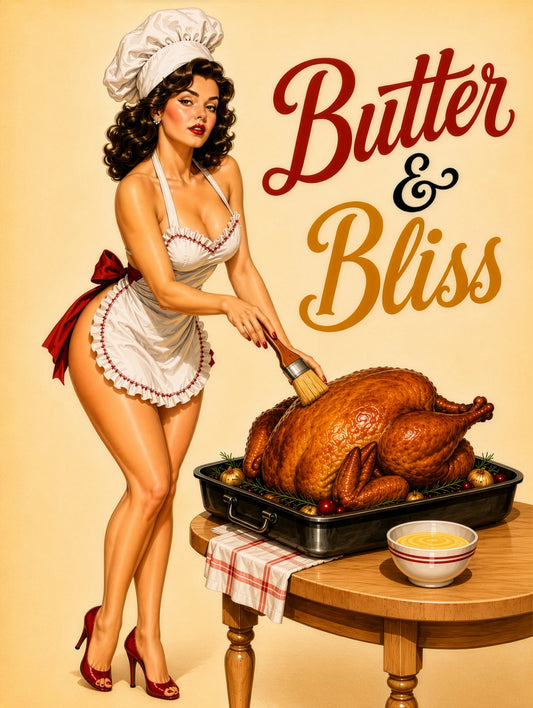
Brown & Bigelow and other calendar companies worked with the military to ensure their art reached servicemen. Gil Elvgren's warm, narrative-rich calendar illustrations had a specific and powerful wartime appeal: they depicted a world of cheerful domestic beauty — the home front, the everyday world, the specific American pleasures of ordinary peacetime life.
Looking at an Elvgren illustration in a barracks in England or a tent in New Guinea, a serviceman wasn't just seeing a beautiful woman — he was seeing the world he had come from and intended to return to. That specific meaning gave the images an emotional weight they could not have achieved in peacetime.
Personal Pin Up Collections 💌
Beyond official or semi-official distributions, individual servicemen assembled personal collections of pin up images — from magazine cuttings, from photographs, from letters containing images sent by women back home. These personal collections were intensely private and intensely meaningful — each image carrying the specific emotional weight of a specific story.
Nose Art ✈️
The most spectacular and most uniquely military form of WW2 pinup art. Aircraft crews painted elaborate, custom artworks on the fuselages and noses of their planes — frequently featuring pin up figures, creating thousands of unique, handcrafted examples of military visual expression.
Nose art served multiple functions: Identity — Individual planes had individual characters, expressed through their nose art. In a war that threatened to reduce individuals to statistics, nose art declared: this plane, this crew — specific, named, real.
Morale — A beautifully painted figure on the nose of your aircraft was a daily visual reminder of beauty, warmth, and home.
Superstition — Many crews believed their nose art brought luck. Planes with particularly beloved nose art were sometimes credited with improbable survival records.
Community — Nose art spread across bases as crews shared designs, adapted each other's concepts, and developed a rich visual culture around their aircraft.
🎨 WW2 Pinup Art Aesthetics
The Specific Wartime Quality 💛
WW2 pinup art has a specific aesthetic quality that distinguishes it from both the peacetime tradition that preceded it and the consumer culture tradition that followed. The warmth in wartime pinup is more urgent. The beauty is more poignant. The figures feel less like commercial products and more like genuine reminders of something precious.
This quality is hard to manufacture and easy to recognize — it comes from the specific context, from the knowledge that these images were looked at in conditions of genuine danger and genuine longing.
The Color Story 🎨
WW2 pinup art, particularly in the Vargas tradition, uses a specific warm color palette: luminous skin tones that seem lit from within, warm backgrounds in cream and soft color, accent colors that feel life-affirming rather than decorative. These color choices were not accidental — they created images that communicated warmth and life in the most direct visual terms.
The Narrative of Return 🏠
The best WW2 pinup art implicitly told a story about return — about the world that would be there when the war ended, waiting and warm and beautiful. The domestic settings of Elvgren's wartime work, the soft luminosity of Vargas's figures — these communicated "home" as powerfully as any more explicitly domestic imagery could.
🖌️ The WW2 Pinup Tradition Today
The WW2 pinup tradition lives today in several forms:
Collector culture — Original wartime Esquire magazines, WW2-era calendars, and documented nose art photographs are actively collected and studied.
Living tribute — Veterans and military family members commission pinup portraits as tributes to service and heritage. Our WWII pin up portrait is frequently ordered for exactly this purpose.
Cultural memory — Films, books, and exhibitions regularly engage with WW2 pinup art as a significant chapter in American cultural history.
The Pinup Art Studio tradition — Every portrait we create at Pinup Art Studio connects, however distantly, to the tradition that WW2 pinup art represents: beauty created with genuine skill and genuine care, to be looked at in moments when beauty matters most. Browse our full range including the Army pin up portrait, sailor pin up portrait, and nurse pin up portrait for all military heritage options.
❓ Frequently Asked Questions
Q: What was the most widely distributed WW2 pinup image? Betty Grable's white swimsuit photograph (taken 1943) is most frequently cited as the most distributed — produced in millions of copies specifically for military distribution.
Q: Are original WW2 pinup materials collectible? Yes — original wartime Esquire magazines, calendars, and documented nose art photographs are actively collected. Values depend on condition and specific content.
Q: Can I commission a portrait specifically in the WW2 wartime aesthetic? Yes — our WWII pin up portrait is specifically calibrated to this aesthetic. Specify any additional wartime elements you want in your style notes.
🚀 The Tradition That Endures
WW2 pinup art carried millions through history's darkest chapter. Its legacy — the understanding that beauty matters, that warmth and humanity are worth preserving and celebrating even in the worst of circumstances — is as relevant today as it was in 1943.
👉 Commission your WW2 pinup tribute portrait at Pinup Art Studio today and carry that legacy forward.
✈️ Beauty in darkness. Warmth in cold. This is what they carried, and this is what endures. 🌹