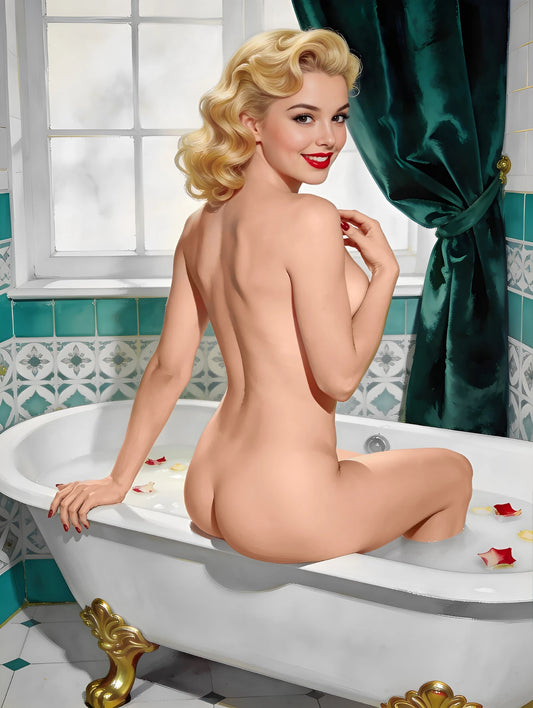
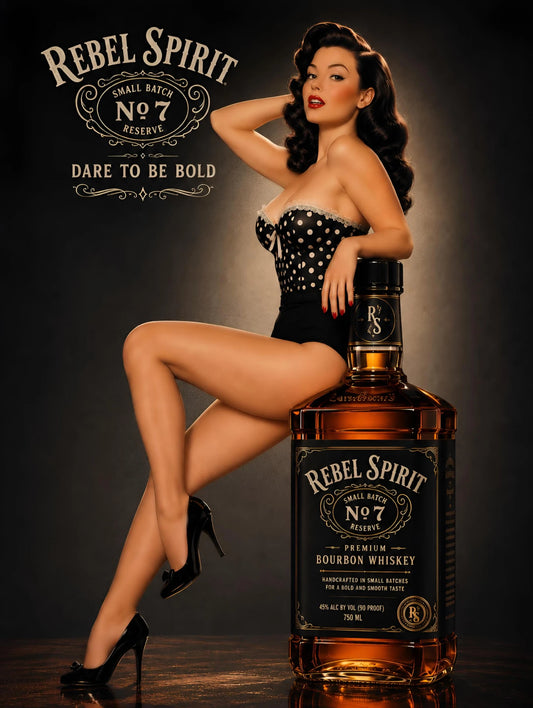
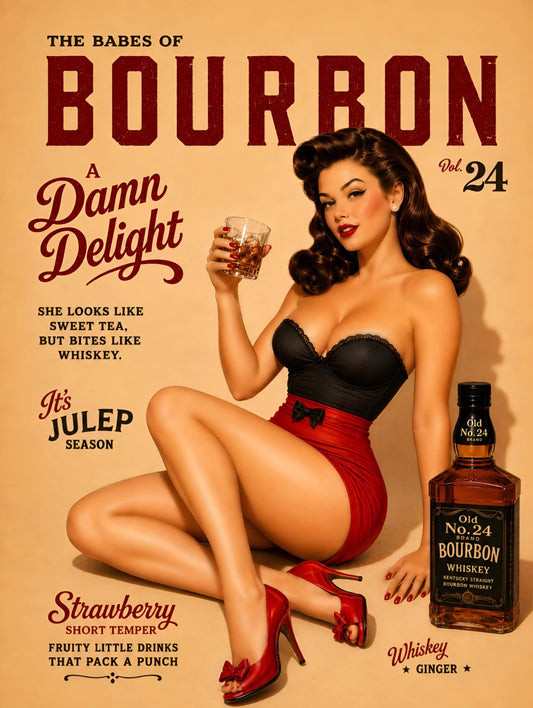
The 1950s produced two parallel and mutually enriching pin up traditions: the painted illustration tradition of Elvgren and Vargas, and the photographic tradition that captured real women in real moments — styled, lit, and posed with extraordinary care to create images of lasting beauty and cultural significance.
1950s pin up photography is not simply a record of what beautiful women looked like in the 1950s. It is a sophisticated artistic tradition with its own aesthetic vocabulary, its own technical approaches, and its own remarkable practitioners — a tradition that produced images of such power and quality that they remain among the most admired and studied photographs of the 20th century.
At Pinup Art Studio, 1950s photographic aesthetics directly inform our portrait work — the specific lighting quality, the posing conventions, the warmth and accessibility that distinguish 1950s pin up photography from the colder glamour of earlier eras are all qualities we work to honor and recreate in our hand-painted custom portraits.
🏛️ The Three Traditions of 1950s Pin Up Photography
The Hollywood Studio Portrait Tradition 🎬
By 1950, the great Hollywood studios had decades of experience creating glamour photography that combined technical mastery with the specific goal of making stars look simultaneously extraordinary and accessible.
The studio portrait photographers of the era — Clarence Sinclair Bull at MGM, Frank Powolny at Fox, Ernest Bachrach at RKO — had refined their techniques to a level of consistent excellence that is still astounding. The specific quality of 1950s Hollywood portrait lighting: a warm, somewhat soft key light creating gentle dimensionality, catch lights in the eyes, enough fill to reduce shadows to a flattering ratio.
The Frank Powolny photograph of Marilyn Monroe (1953) — taken as a studio publicity image — is among the most technically accomplished pin up photographs ever made. The lighting is extraordinary — creating that specific quality of luminous warmth that distinguishes the finest Hollywood portrait work.
Our Hollywood pin up portrait draws directly from this tradition of formally beautiful, dramatically lit studio portraiture.
The Playboy Production Tradition 📰
Playboy's launch in December 1953 created a new standard for pin up photography — combining the mainstream accessibility of newsstand distribution with the ambitions of fine art photography.
Hugh Hefner's vision for the magazine's photography was genuinely sophisticated: well-lit, thoughtfully composed, treated as artistic production rather than commercial documentation. The photographers who worked on the early Playboy centerfolds — many of them former Hollywood or advertising photographers — brought genuine craft to the work.
The specific Playboy aesthetic of the 1950s: somewhat more elaborate settings than simple studio portraiture, a slightly warmer and more intimate quality than Hollywood glamour, and consistently extraordinary lighting that made the models look their best while maintaining a quality of naturalistic accessibility.
Alberto Vargas's illustrations for Playboy beginning in 1960 created a direct visual dialogue between the photographic and painted traditions — his luminous, airbrushed figures explicitly responding to and elevating the photographic aesthetic the magazine had established.
The Irving Klaw Underground Tradition 🎭
Operating from his New York mail-order business, Irving Klaw created a parallel pin up photography tradition that was simultaneously less polished than Hollywood or Playboy work and more culturally adventurous.
Klaw's photographs of Bettie Page — the most celebrated product of his operation — had a specific, rough-edged quality that distinguished them from mainstream pin up photography. The lighting was less controlled, the settings more theatrical and elaborate, the costumes more extreme.
But what the Klaw photographs achieved that the more polished traditions could not was a quality of genuine personality. Page in Klaw's photographs looks like herself — completely, unconstrainedly herself — in a way that studio-controlled photography rarely permitted.
📷 The Technical Vocabulary of 1950s Pin Up Photography
Lighting Setups 💡
The most characteristic 1950s pin up lighting approaches:
The Rembrandt setup — A key light positioned above and to one side of the subject at approximately 45 degrees, creating a triangular highlight on the shadowed cheek. Creates dimensional, sculpted light with a warm, classic quality.
The Hollywood butterfly — Key light directly in front and above, creating a soft shadow under the nose (the "butterfly" shadow). The most glamorous, most associated with classic Hollywood portraiture.
The side-light dramatic — Strong side lighting with minimal fill, creating deep shadows and bold highlights. More dramatic and less accessible than the other approaches — used for theatrical or moody pin up work.
Film Stock and Color 🎞️
1950s pin up photography worked in both black-and-white and color film:
Black-and-white — The dominant format for serious studio portraiture through the 1950s. B&W photography demands and reveals technical mastery in lighting and composition in ways that color work can obscure. The finest 1950s pin up photographs are B&W works.
Early color film — Kodachrome and Ektachrome films of the 1950s produced the specific warm, saturated color quality associated with mid-century color photography. The slightly warm color cast of 1950s color film is part of what makes era-appropriate photography so immediately recognizable.
🌹 1950s Pin Up Photography's Influence on Painted Portraits
The dialogue between 1950s pin up photography and pin up illustration was not one-directional. Each tradition influenced the other:
Photography influenced illustration — Elvgren photographed models in his studio before painting, using the photographs as reference. The specific quality of his warm, directional lighting reflects photographic influence.
Illustration influenced photography — Pin up photographers deliberately created compositional and lighting approaches that referenced the idealized quality of great illustration — seeking the specific warmth and humanity that Elvgren achieved.
This cross-pollination created the specific aesthetic vocabulary of 1950s visual glamour — and it is exactly the vocabulary our artists at Pinup Art Studio work within when they transform customer photographs into hand-painted portraits.
When you submit a well-lit, warmly styled reference photograph at Pinup Art Studio, you're providing our artists with material in the photographic tradition that informed and was informed by the greatest pin up illustration. The portrait we create from that photograph connects to both traditions simultaneously.
❓ Frequently Asked Questions
Q: Which 1950s photographers are most important to know? Frank Powolny (Fox Studios), Clarence Sinclair Bull (MGM), and Irving Klaw (underground/mail-order) represent the three major traditions. For the painted illustration-photography dialogue, understanding Elvgren's use of photographic references is particularly important.
Q: Can I get a portrait that specifically references 1950s photographic aesthetics? Yes — specify "1950s studio photography aesthetic" or "Playboy 1950s warmth" in your style notes when ordering at Pinup Art Studio.
Q: How should I light my reference photograph for the most authentic 1950s result? A single warm light source (a lamp or window) positioned at about 45 degrees to your face, with a white reflector or another white surface on the opposite side to reduce shadows. This creates a natural approximation of classic 1950s portrait lighting.
🚀 Own Your 1950s-Inspired Portrait
The 1950s pin up photograph tradition produced some of the most beautiful images in the history of photography. That tradition can inform your own portrait — through careful reference photography and our artists' deep understanding of what made 1950s pin up photography so extraordinary.
👉 Order your 1950s-inspired pin up portrait at Pinup Art Studio today and own a piece of the golden age of visual glamour.
📸 The camera captured the moment. The portrait preserves it forever. ✨