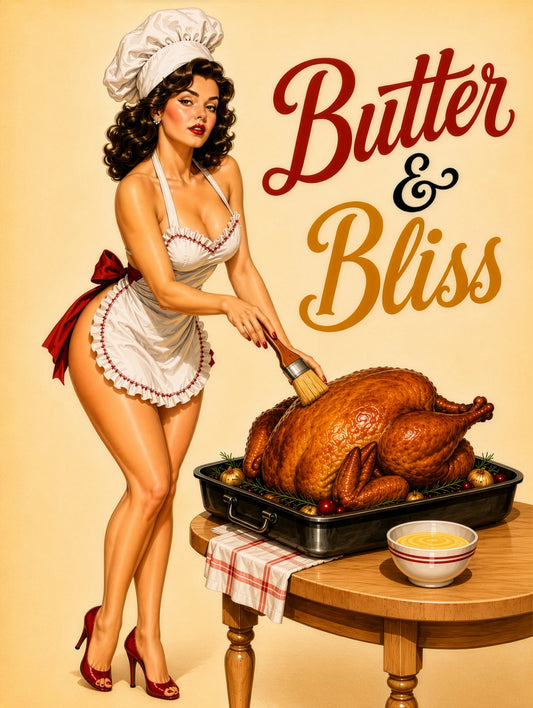
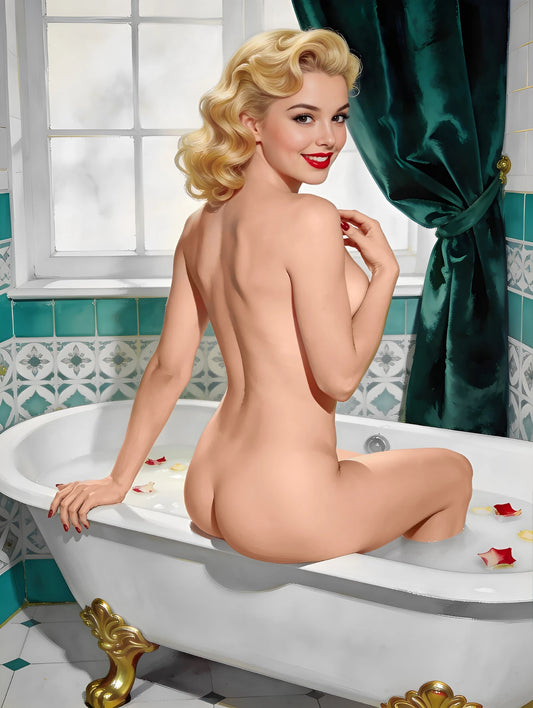
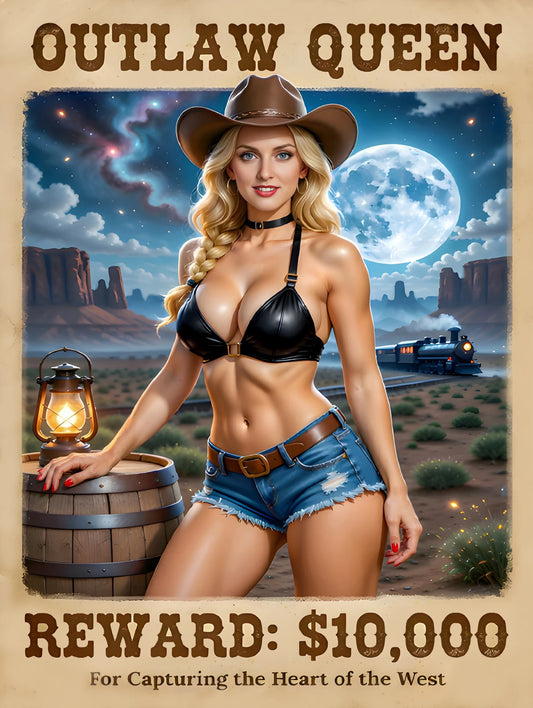
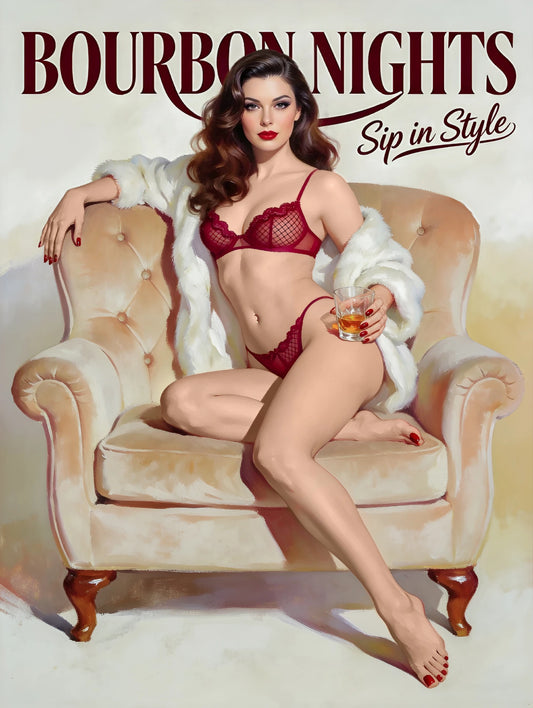
If you had to choose a single year as the starting point of pin up art's most magnificent era — the year when everything the tradition had been building toward finally clicked into its most perfect, most fully realized form — that year would be 1950.
Not because pin up art was born in 1950 (it wasn't — its roots stretch back to the Victorian era). Not because the greatest artists emerged in 1950 (Elvgren had been working for years, Vargas even longer). But because 1950 represents a specific cultural inflection point — the moment when post-war prosperity, the explosion of calendar and magazine printing, the emergence of a specifically American consumer culture, and the presence of a generation of extraordinary artistic talent all converged into something genuinely unprecedented.
The decade that followed — the 1950s pin up golden age — produced the images that most people visualize when they hear the words "pin up art." The bold colors. The confident poses. The specific warmth of Gil Elvgren's domestic narratives. The luminous refinement of Vargas's airbrushed figures. The joy, the glamour, the completely unashamed celebration of feminine beauty and personality.
At Pinup Art Studio, the 1950s are not just history — they're the living tradition that informs every portrait we create. Our 1950s Pinup Girls collection showcases this extraordinary aesthetic, and every custom pin up portrait we produce draws from the lessons the golden age taught about color, warmth, and the specific art of making people feel celebrated.
🌟 The Cultural Context of 1950s Pin Up Art
Post-War America and the Prosperity Boom 💛
The early 1950s were defined by a specific quality of American optimism that had no real precedent and has had no real sequel. The war was won. The economy was growing at extraordinary rates. Young men who had fought and survived were coming home to build lives — buying houses in new suburbs, starting families, pursuing the prosperity that the war had seemed to promise.
This optimism pervades 1950s pin up art in a way that distinguishes it from the work of any other era. Elvgren's figures are caught in moments of domestic joy — a charming mishap in the kitchen, a playful moment in the garden, a cheerful interaction with a pet. These are not images of suffering or struggle — they are images of a world where life is good and beauty is abundant.
This isn't naivety — it's a specific cultural production, shaped by the specific emotional needs of a nation that had just survived something catastrophic and desperately wanted to believe that what came next would be worth it.
The Calendar Art Explosion 📅
The early 1950s saw the golden age of American calendar art. Companies like Brown & Bigelow — Gil Elvgren's primary publisher — produced millions of calendars annually, distributing pin up art to garages, diners, barbershops, and homes across America.
This mass distribution meant that pin up art was not gallery art — it was everywhere art. It appeared in the ordinary spaces of ordinary American lives, creating an intimacy and familiarity that formal gallery display could never achieve.
The Magazine Ecosystem 📰
Esquire had established the template with Vargas and Petty. By 1950, a flourishing ecosystem of men's magazines — including the newly launched Playboy (1953) — provided additional venues for pin up art and pin up photography at the highest levels of commercial production.
The interplay between magazine pin up and calendar pin up created a self-reinforcing aesthetic — the same visual vocabulary appearing in multiple contexts, creating a comprehensive mid-century visual culture around confident, glamorous feminine imagery.
🖌️ The Great Artists of 1950s Pin Up
Gil Elvgren: The Heart of the Decade 🌹
By 1950, Gil Elvgren was at the absolute peak of his powers. His Brown & Bigelow calendar work from the early-to-mid 1950s represents the pinnacle of warm, narrative-rich American pin up art — figures caught in charming moments, painted with extraordinary technical mastery and genuine human warmth.
The specific Elvgren quality of the 1950s work — the warm colors, the playful narratives, the figures that feel genuinely alive and genuinely happy — is what most people visualize when they imagine "classic pin up art." Our classic pin up portrait draws directly from this tradition.
Alberto Vargas: The Luminous Counterpoint ✨
While Elvgren was creating warm, accessible, narratively rich calendar art, Vargas was producing the most refined, most technically extraordinary pin up illustrations ever made for Esquire and then Playboy.
The Vargas girls of the early-to-mid 1950s have a specific quality of luminous idealization — skin that appears lit from within, figures of impossible elegance and grace, compositions of quiet, profound beauty. Our Vargas-style pin up portrait honors this luminous tradition.
The Supporting Cast 🌟
Beyond Elvgren and Vargas, the 1950s calendar and magazine world was populated by dozens of skilled artists whose work, while less celebrated today, contributed enormously to the visual richness of the era. Fritz Willis, Earl Moran, Edward Runci, Joyce Ballantyne — each brought distinctive approaches to the shared vocabulary of the form.
👗 The Visual Language of 1950 Pin Up
The Color Palette 🎨
1950s pin up art is immediately recognizable through its color vocabulary:
Cherry red — The dominant accent color. In lips, in clothing, in roses, in backgrounds. Red in 1950s pin up communicates warmth, vitality, and the specific American optimism of the era.
Powder blue — The cool complement to red's warmth. The color of clear skies, clean kitchens, and the fresh brightness of a prosperous domestic world.
Sunshine yellow — Joy, warmth, and the specific mid-century American cheerfulness that pervades the decade's visual culture.
Warm cream and ivory — The background palette against which all other colors sing.
Rich flesh tones — Warm, healthy, golden skin tones that communicate vitality and wellbeing.
The Silhouette 👗
The 1950s fashion silhouette is inseparable from 1950s pin up art:
The hourglass figure — Nipped waist, full bust, curved hips. Emphasized through fit-and-flare dresses, high-waisted skirts, structured bodices, and fitted sweaters.
The fit-and-flare dress — The quintessential 1950s garment. A fitted bodice releasing into a full, swinging A-line skirt — simultaneously flattering, graceful, and full of movement.
The high heel — Always. The specific elongation of the leg created by a well-chosen heel is as important to the 1950s pin up silhouette as the garment itself.
The Hair 💇♀️
1950s pin up hairstyling represents some of the most technically accomplished and visually spectacular hair in the history of fashion:
Victory rolls — The most iconic 1950s pin up hairstyle. Large cylindrical rolls above the temples, creating dramatic height and framing the face.
Pin curls — The foundation technique — small sections of hair wound into flat circles, dried, and released into perfectly set curls or waves.
The soft set — Larger waves created through larger curls or rollers, creating the flowing, glamorous waves most associated with 1950s Hollywood.
🌹 1950 Pin Up Icons: The Women Who Defined the Era
Betty Grable 🌟
The photograph of Betty Grable in a white swimsuit, looking over her shoulder with a radiant smile — taken in 1943 and distributed to servicemen through the war — is arguably the most widely distributed pin up image in history. By 1950, Grable was at the absolute peak of her film career and her pin up cultural influence.
Marilyn Monroe 💛
Monroe's film career was just beginning in 1950 — but her early modeling work and the specific quality of luminous, warm sexuality she brought to every image she appeared in had already established her as a pin up presence of extraordinary power.
Bettie Page 👑
Page began her modeling career in 1950, encountering Jerry Tibbs on the Coney Island beach. The year 1950 is, appropriately, both the birth of the most iconic pin up figure in history and the beginning of the tradition's most glorious decade.
Commission your own 1950s-inspired portrait at Pinup Art Studio — choosing from our dedicated classic pin up portrait, retro pin up portrait, or vintage pin up portrait for the most authentically 1950s result.
📸 Capturing the 1950 Pin Up Look Today
The Reference Photo 📷
For the most authentically 1950s portrait result:
Wear period-appropriate clothing — A fit-and-flare dress, a fitted sweater with a high-waisted skirt, a halter top — anything that references the 1950s silhouette.
Style your hair — Even an approximation of 1950s hair styling (soft waves, victory rolls, or a classic updo) dramatically improves the vintage authenticity of your reference photo.
Red lip — The single most period-specific makeup choice. Apply before photographing.
Natural, warm lighting — The 1950s aesthetic is warm and accessible, not dramatically lit. Natural window light creates the most period-appropriate quality.
Our 1950s-Specific Portrait Styles 🎨
- Classic Pin Up Portrait — The most directly 1950s-adjacent style 🌹
- Flirty Pin Up Portrait — The playful mid-moment energy of Elvgren's best 1950s work
- Pinup Charm Portrait — The sweet, warm quality of the most beloved 1950s calendar art
- Retro Pin Up Portrait — Deep vintage authenticity for the most historically faithful result
❓ Frequently Asked Questions
Q: What made 1950 specifically significant for pin up art? 1950 marks the beginning of the decade when pin up art's commercial reach was at its absolute maximum — calendar art distributed to millions of American homes, magazine pin up appearing in nationally circulated publications — while simultaneously featuring the finest artistic talent the tradition has ever seen.
Q: Who were the most important pin up artists working in 1950? Gil Elvgren and Alberto Vargas were the dominant figures. Browse our 1950s Pinup Girls collection for the visual vocabulary their work established.
Q: Can I commission a portrait specifically in the 1950 pin up aesthetic? Yes — specify "1950s calendar art aesthetic" or "Elvgren-influenced warmth" in your style notes when ordering at Pinup Art Studio.
Q: What colors are most authentically 1950s for a pin up portrait? Cherry red, powder blue, sunshine yellow, and warm cream are the most specifically 1950s palette choices. Specify your color preferences in your order notes.
🚀 Own Your Golden Age Portrait
The 1950s pin up golden age produced some of the most beautiful and enduring images in American visual history. That tradition lives on in every portrait we create at Pinup Art Studio.
👉 Commission your 1950s-inspired pin up portrait today and step into the most glamorous decade in vintage art history.
🌹 The golden decade. The boldest colors. The warmest glamour. Your portrait awaits. ✨