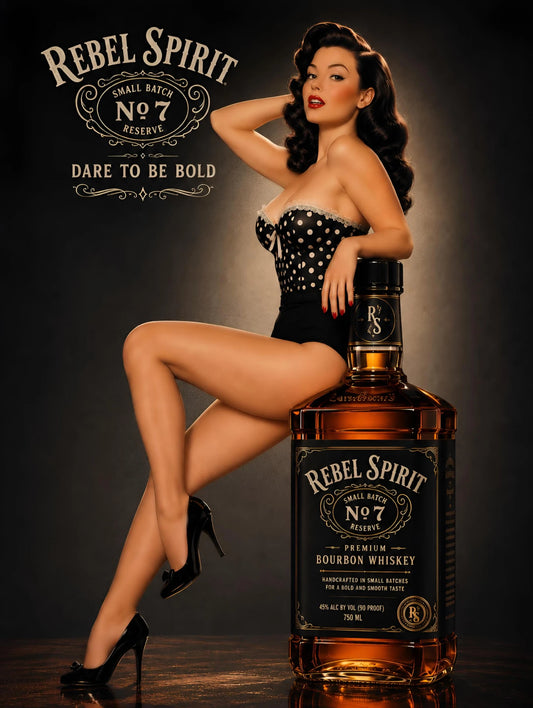
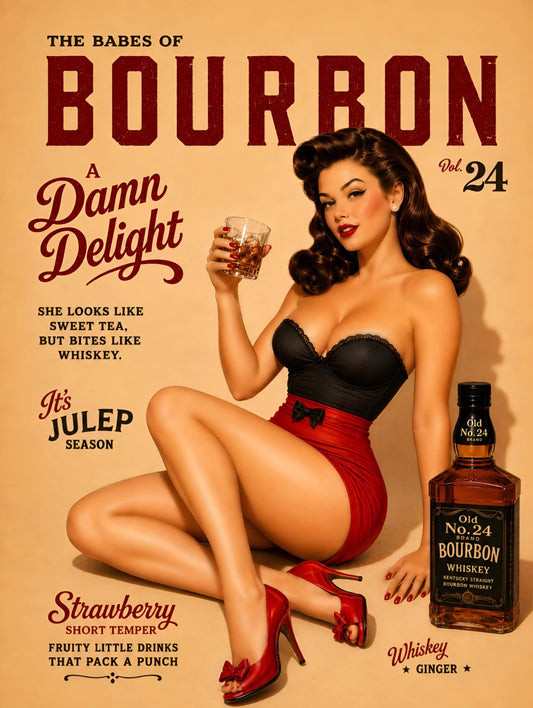
The relationship between vintage pin up art and feminist thought is one of the most genuinely interesting and genuinely contested conversations in contemporary popular culture. And it is a conversation that resists easy resolution — not because the participants are confused, but because the subject is genuinely complex.
At Pinup Art Studio, we create custom pin up portraits for thousands of customers — and many of them identify explicitly as feminists. They are not confused about this apparent tension. They have thought about it carefully and reached conclusions that are worth understanding.
This guide explores the full complexity honestly — the legitimate critiques of the tradition, the compelling arguments for reclamation, and ultimately what it means to engage with pin up art as a feminist in the 21st century. 🌟
📜 The Historical Critique: Understanding the Concerns
Any honest discussion of pin up art and feminism must begin by acknowledging the legitimate concerns that feminist scholars have raised about the tradition.
The Audience Problem 👥
Classic pin up art was produced primarily for male consumption. The economic transaction that created these images — male art directors commissioning male (or mixed-gender) artists to produce images of women for distribution to male audiences — raises genuine questions about whose interests these images served.
When the primary purpose of an image of a woman is to please a male viewer, the woman in the image is functioning as an object of a male gaze rather than as a subject with her own perspective and agenda. This is the foundational feminist critique of pin up art, and it deserves to be taken seriously rather than dismissed.
The Idealization Problem 🌸
Pin up art consistently depicts women according to beauty standards that are both specific and narrow — standards of youth, conventional attractiveness, able-bodiedness, and (in the golden age) whiteness that excluded and implicitly devalued the vast majority of actual women.
This idealization, feminists argue, is not neutral — it contributes to a broader cultural pattern of evaluating women primarily on the basis of physical appearance and ranking them according to how closely they approximate an externally imposed ideal.
The Consent Complexity 🤔
The question of whether the women depicted in pin up art consented freely to their participation is genuinely complicated. The professional models who chose this work had agency — and that agency should be respected. But the social and economic conditions that made this work appealing, the cultural pressures that shaped their choices, and the ways their images were used and distributed without always their ongoing consent are all legitimate concerns.
💪 The Reclamation Argument: Why Many Feminists Embrace Pin Up
Against these concerns, contemporary feminist engagement with pin up culture offers several compelling responses:
The Agency Argument 🌟
Contemporary pin up culture is overwhelmingly driven by women — as subjects, as artists, as consumers, as community members. When a woman commissions a portrait of herself from Pinup Art Studio, she is not participating in a transaction that serves male interests. She is using the aesthetic vocabulary of pin up art for her own purposes — self-celebration, self-expression, personal pleasure.
The economic and creative structure of contemporary custom pin up portrait commissioning is completely different from the golden-age industry. The woman is the client, the creative director, the owner of the resulting artwork. The male gaze, if present at all, is entirely incidental to a transaction that is fundamentally between a woman and an artist, in service of that woman's own self-image.
The Confidence Aesthetics Argument 💋
Many contemporary feminists argue that the specific aesthetics of pin up art — confidence, self-possession, deliberate self-presentation, the unapologetic occupation of one's own appearance and space — are actually feminist aesthetics when understood correctly.
The pin up woman is not passive. She is not shy. She does not minimize or apologize. She presents herself boldly, occupies the frame completely, and makes no gesture toward diminishing herself for anyone's comfort. These qualities — whatever their origins — communicate something about feminine confidence that is genuinely empowering to many people.
The Reclamation Tradition 🌈
Feminist cultural theory has a strong tradition of reclaiming aesthetic forms that have problematic histories. Lipstick feminism, sex-positive feminism, the neo-burlesque movement — all involve taking cultural forms that have been used to objectify or constrain women and transforming their meaning through deliberate, politically conscious engagement.
The contemporary pin up movement is part of this tradition. Women who identify as feminists and who love vintage pin up aesthetics are not unaware of the tradition's complicated history — they are engaging with that history deliberately, transforming the meaning of these aesthetics through the specific terms of their engagement.
The Inclusivity Expansion Argument 🌸
Contemporary pin up culture has expanded dramatically in terms of who is represented. Bodies of all sizes, skin tones, ages, and gender presentations are celebrated in contemporary pin up art in ways that the golden age could not or would not accommodate.
This expansion is genuinely feminist in effect — it uses the aesthetic tradition to celebrate a broader range of human beauty than that tradition originally recognized. Our custom portraits at Pinup Art Studio are created for people of every description, and this inclusivity is not incidental to our practice — it is central to it.
🎨 The Both/And Resolution
Perhaps the most honest position is one that holds the complexity without resolving it artificially:
Pin up art has a complicated history AND it can be a vehicle for feminist expression. The tradition was created in a context that often objectified women AND it created images of women who are confident, active, and self-possessed in ways that feel genuinely empowering. Individual women can engage with this tradition in ways that are meaningful and personally empowering AND the broader cultural history deserves continued critical engagement.
The women at Pinup Art Studio who commission portraits of themselves are doing something real and meaningful — celebrating themselves in a tradition they love, on their own terms, for their own reasons. That experience is real and it matters. It does not require pretending that the tradition's history is uncomplicated to be genuine.
❓ Frequently Asked Questions
Q: Can you create a pin up portrait that incorporates explicitly feminist imagery? Yes — feminist symbols, text, and imagery can be incorporated into portrait compositions. Specify in your style notes at Pinup Art Studio.
Q: Is there a version of pin up art that is unambiguously feminist? When a woman commissions a portrait of herself, controls every creative decision, and uses the resulting image for her own purposes — that is as close to unambiguously feminist as pin up art gets.
Q: How do you handle the representation of diverse bodies and identities at Pinup Art Studio? We create beautiful portraits for people of every body type, age, skin tone, and gender presentation. Vintage glamour has room for everyone — and we work to make that true in everything we create.
🚀 Engage on Your Own Terms
The most powerful feminist act with regard to pin up art might simply be to engage with it — or not — on your own terms, for your own reasons, with full awareness of its history.
If it speaks to you — if the visual tradition of confident, bold, beautifully presented femininity resonates with something real in your experience — then commissioning a portrait is a meaningful, legitimate, and genuinely empowering act.
👉 Commission your portrait at Pinup Art Studio today — on your terms, for your reasons, in your own most spectacular style.
💪 Your body. Your image. Your art. Your terms. Always. ✨