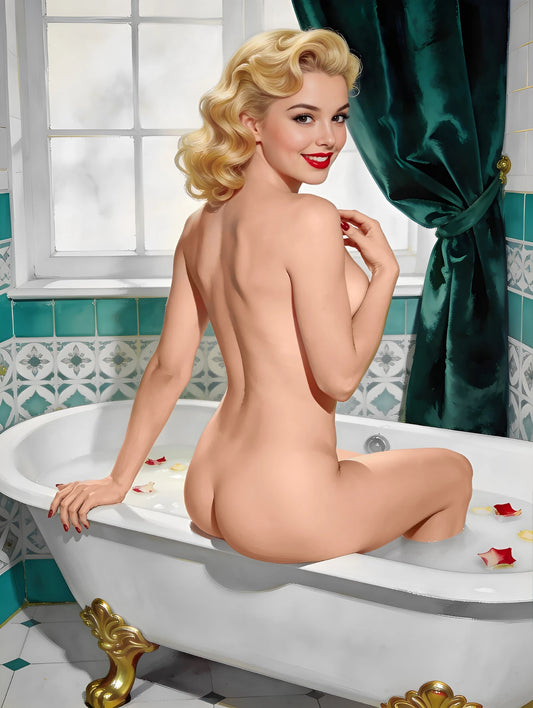
You've invested in a piece of art that is uniquely yours — a custom pinup portrait rendered in the warm, vibrant style of vintage illustration. It arrived beautifully, it looks extraordinary on your wall, and now you want to make sure it stays that way for years, even decades, to come.
The good news is that canvas art is remarkably durable when treated with a little basic care. Unlike paper prints, which are vulnerable to moisture, tearing, and yellowing, a quality canvas portrait is built to last. But like any artwork, it benefits from thoughtful handling, the right environment, and occasional gentle maintenance.
This guide covers everything you need to know: where to hang your portrait, how to clean it, how to protect it from the most common causes of damage, and what to do if something goes wrong.
Choosing the Right Location
Where you hang your canvas portrait has a greater impact on its longevity than almost any other factor. Before you hammer in the first nail, consider the following.
Avoid Direct Sunlight
UV radiation is the primary cause of colour fading in both printed and painted artwork. Even high-quality archival inks will fade over time when exposed to direct sunlight — and the process is gradual enough that you may not notice it happening until the damage is significant.
Hang your portrait on a wall that does not receive direct sunlight at any point during the day. If your ideal wall does catch direct sun, consider installing UV-filtering window film, which blocks the majority of UV radiation without significantly affecting the quality of natural light in the room. Alternatively, position the portrait on an adjacent wall that benefits from the room's natural light without being in the direct path of the sun.
North-facing walls (in the northern hemisphere) receive no direct sunlight and are traditionally considered the ideal location for artwork. South-facing walls in the southern hemisphere offer the same advantage.
Avoid Heat Sources
Hanging a canvas portrait directly above a radiator, fireplace, or heating vent is one of the most common causes of canvas damage. The repeated cycle of heating and cooling causes the canvas fibres to expand and contract, which over time leads to warping, cracking, and loss of tension. The dry heat from radiators can also cause the canvas to become brittle.
Maintain a minimum distance of at least 60cm between your portrait and any heat source. If your fireplace wall is the natural focal point of your room, consider hanging the portrait to the side of the fireplace rather than directly above it.
Avoid High-Humidity Rooms
Bathrooms and kitchens are not ideal long-term locations for canvas art. The fluctuating humidity from steam and cooking moisture causes the canvas to expand and contract repeatedly, which can lead to sagging, warping, and in extreme cases, mould growth on the back of the canvas.
If you love the idea of art in your bathroom or kitchen — and it is a genuinely beautiful idea — consider using a high-quality print on aluminium or acrylic for those spaces, and reserving your canvas portrait for a more stable environment.
The ideal environment for canvas art is a room with a stable temperature between 18–24°C and moderate humidity between 45–55% relative humidity. Most living rooms, bedrooms, and home offices fall comfortably within these parameters.
Hanging Your Portrait Safely
A canvas portrait that falls from the wall is not just a safety hazard — it can cause irreparable damage to the artwork. Take the time to hang it properly from the start.
Always use appropriate wall fixings for your wall type. Plasterboard walls require specialist hollow-wall anchors rated for the weight of your portrait. Solid masonry walls need masonry screws or plugs. If you are unsure about your wall type or the appropriate fixings, consult a hardware professional or a handyman — it is a five-minute conversation that can save you significant heartache.
Use two hanging points rather than one wherever possible. A single central hook allows the portrait to swing and tilt over time. Two hooks, spaced evenly across the back of the canvas, keep it level and stable.
Check the hanging hardware on the back of your canvas periodically — once or twice a year is sufficient. D-rings, wire, and sawtooth hangers can loosen over time, particularly in rooms with vibration from traffic or music. A quick check takes thirty seconds and can prevent an accident.
Cleaning Your Canvas Portrait
Canvas portraits accumulate dust over time, just like any surface in your home. Regular, gentle dusting is the most important maintenance task you can perform — and it is simpler than most people expect.
Routine Dusting
Every two to three months, gently dust your portrait using a soft, dry microfibre cloth or a clean, soft-bristled brush. Work in light, circular motions across the surface of the canvas, using minimal pressure. You are lifting dust from the surface, not scrubbing it — the touch should be feather-light.
A clean, soft makeup brush is an excellent tool for this purpose, particularly for portraits with textured or detailed areas. The soft bristles reach into recesses without applying pressure to the canvas surface.
A can of compressed air, held at a distance of 20–30cm from the canvas, can also be effective for dislodging dust from textured areas. Use short bursts rather than a continuous stream, and keep the can upright to prevent propellant from contacting the canvas.
What to Avoid
Never use water, cleaning sprays, or solvents on a canvas print. Moisture causes the ink to bleed and the canvas fibres to distort, and the damage is typically irreversible. This includes seemingly gentle products like glass cleaner, furniture polish, and even plain water on a damp cloth.
Never use abrasive materials — paper towels, rough cloths, or scrubbing pads — on the canvas surface. Even light abrasion can damage the ink layer and leave visible marks.
If your portrait has accumulated significant grime beyond what gentle dusting can address, consult a professional art conservator rather than attempting to clean it yourself. A conservator has the tools and expertise to clean artwork safely without causing damage.
Handling Your Portrait
When moving or repositioning your portrait, always handle it by the frame or stretcher bars — never by the canvas surface itself. The oils and moisture from your hands can transfer to the canvas and cause long-term damage to the ink layer.
If you need to store your portrait temporarily — during a house move, for example — wrap it in acid-free tissue paper or a clean cotton sheet, then in bubble wrap for protection. Store it upright rather than flat, and never stack heavy objects on top of it. Keep it in a climate-controlled environment rather than a garage, attic, or basement, where temperature and humidity fluctuations can be extreme.
Addressing Common Issues
Canvas Sagging
Over time, canvas can relax slightly and develop a gentle sag — particularly in larger formats. This is a normal characteristic of canvas as a material and does not indicate a fault with the artwork.
Most gallery-wrapped canvases include small wooden wedges (called keys or expansion wedges) inserted into the corners of the stretcher frame. To re-tension a sagging canvas, gently tap these wedges further into the corners using a small mallet or the handle of a screwdriver. Work gradually and evenly, tapping each corner in turn rather than driving one wedge all the way in before moving to the next. The canvas will tighten progressively as the wedges expand the stretcher frame.
If your canvas does not have expansion wedges, or if the sagging is significant, a professional framer can re-stretch the canvas onto a new stretcher frame. This is a straightforward and relatively inexpensive process that will restore the portrait to its original taut, flat appearance.
Minor Surface Marks
If your portrait develops a minor surface mark — a fingerprint, a light scuff — resist the temptation to rub it with a damp cloth. Instead, try very gently lifting the mark with a dry microfibre cloth using the lightest possible touch. If the mark does not respond to this treatment, leave it and consult a conservator rather than risking further damage.
Warping or Bowing
If your canvas develops a bow or warp — where the centre of the canvas curves away from the wall — this is usually caused by humidity fluctuations or an uneven stretcher frame. Re-tensioning the expansion wedges (as described above) will often resolve a minor bow. For more significant warping, a professional framer or conservator is the appropriate resource.
Protecting Your Investment for the Long Term
A custom pinup portrait is not a disposable decoration — it is a piece of art that deserves to be treated as such. The care principles outlined in this guide are simple, require minimal time, and will make a significant difference to the longevity and appearance of your portrait over the years.
Hang it in the right location. Dust it gently every few months. Keep it away from heat, moisture, and direct sunlight. Check the hanging hardware periodically. And if something goes wrong, consult a professional rather than attempting a DIY fix that could cause irreversible damage.
Do all of this, and your pinup portrait will remain a vibrant, conversation-starting centrepiece for decades to come — a piece of art that ages as gracefully as the vintage aesthetic it celebrates.
Browse our full range of Pinup Girl Prints and 1950s Pinup Girls portraits, or commission your own fully bespoke piece with our Custom Pinup Art Portrait. Your portrait is waiting to be made.