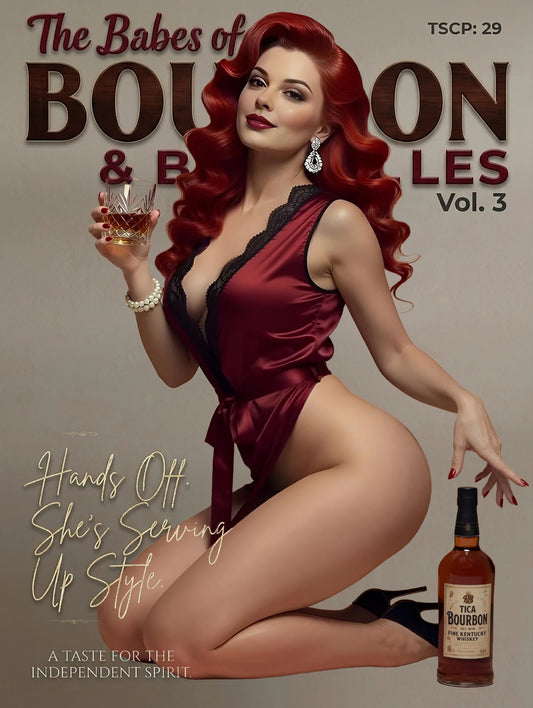
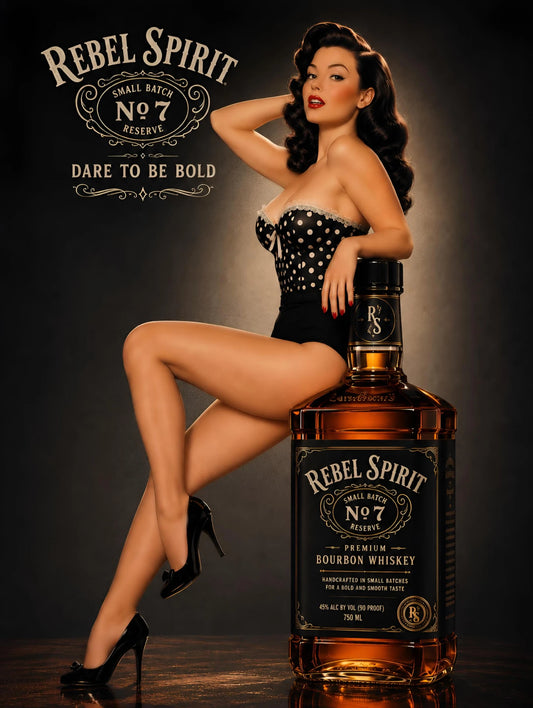
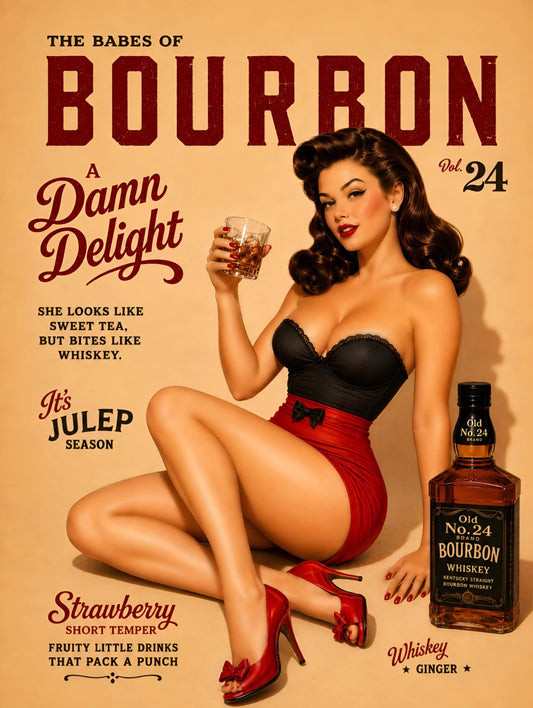
Pin up art is one of the most enduring, most widely reproduced, and most culturally significant art forms in modern history — and yet it rarely receives the serious art historical attention it deserves. Dismissed by some as commercial illustration, its masters were genuine artists of extraordinary skill whose work shaped how an entire culture understood beauty, femininity, and desire for more than a century.
At Pinup Art Studio, we are inheritors and celebrants of this tradition. Every custom pin up portrait we create connects to a lineage that stretches back more than 130 years. In this comprehensive history, we'll trace that entire lineage — from the Victorian chromolithograph to the WWII Varga Girl to the digital custom portrait of today.
This is the story of an art form that refused to be forgotten. 🌟
🏛️ The Victorian Origins (1880s–1900s)
The roots of pin up art are often traced to the late 19th century, when advances in chromolithographic printing made it possible to produce affordable, full-color illustrations at mass scale for the first time.
Chromolithography and the Birth of the Pin Up 🖨️
Before chromolithography, full-color printed images were rare and expensive luxuries. By the 1880s, the technology had advanced to the point where vibrant, detailed color illustrations could be produced cheaply enough to use as advertising materials, trade cards, and calendar art.
American manufacturers — tobacco companies, patent medicine producers, beer brewers — began including attractive illustrated cards with their products. The most popular subjects were women: fashionably dressed, attractively posed, and undeniably appealing. These were not yet pin up images in the fully realized sense, but they established the template: a beautiful woman, reproduced in color, used to promote a product or brand.
The Gibson Girl (1890s–1910s) 🌹
The first truly iconic "pin up" figure was Charles Dana Gibson's Gibson Girl — a stylized ideal of American womanhood that appeared in Life magazine throughout the 1890s and 1900s. The Gibson Girl was tall, confident, independent, and athletically capable — a new vision of femininity that broke from Victorian constraint.
The Gibson Girl was reproduced on everything: wallpaper, fans, plates, pillowcases, and of course, pinned to walls. She was the first mass-media ideal of beauty, the prototype for every pin up figure that followed.
🌍 The Edwardian Era and Early Pin Up (1900s–1920s)
Harrison Fisher and the American Beauty 🌸
Fisher's idealized portraits of women for the Saturday Evening Post and other major magazines established the "American beauty" template that would dominate pin up art for decades. His women were warm, accessible, and deeply feminine — the visual language of aspiration made human.
The Bathing Beauty Era 🏖️
The 1910s and 1920s saw the emergence of bathing beauty photography and illustration as a distinct genre. As swimwear became gradually less restrictive and beach culture grew, images of women in swimwear became a popular and commercially successful category.
This era directly connects to our beach pin up portrait tradition — the joy of summer, the beauty of the outdoors, the specific freedom of the water.
Prohibition and the Jazz Age 🎷
The 1920s brought a specific energy to pin up art: the flapper, the jazz baby, the woman who drank and danced and voted and drove automobiles. Pin up images of the 1920s have a particular crackling energy — the specific joy of freedoms newly won.
🎨 The Art Deco Golden Age (1920s–1930s)
Rolf Armstrong: The Master of Pastel 🌈
Armstrong was one of the first pin up artists to achieve genuine celebrity status. His use of soft pastels to create luminous, idealized figures was revolutionary — a technical approach that influenced virtually every pin up artist who followed. His women were dreamy, romantic, and softly beautiful in a way that felt both aspirational and intimate.
George Petty and the Petty Girl 📐
Working for Esquire magazine from 1933 onward, Petty created the "Petty Girl" — a long-limbed, elegantly proportioned figure with a crisp, graphic quality very different from Armstrong's softness. The Petty Girl was simultaneously athletic and glamorous, a vision of modern American femininity that captivated millions.
Art Deco Influence on Pin Up Aesthetics 🏛️
The Art Deco movement — with its emphasis on geometric elegance, strong lines, and the beauty of the modern — influenced pin up art enormously in this period. The elongated proportions, the dramatic contrast, the sophisticated color palette of Art Deco all found their way into the pin up tradition.
✈️ The WWII Golden Age (1940s)
This is the era that most people think of when they imagine classic pin up art — and with good reason. The combination of wartime emotional intensity, the explosion of mass-market illustration, and the presence of a generation of genuinely extraordinary artists created a perfect storm.
Alberto Vargas and the Varga Girls 🌟
Vargas's work for Esquire (from 1940) and later Playboy defined what pin up art could be at its absolute finest. His airbrushed technique created figures of luminous, almost supernatural beauty — women who existed in a space between the real and the ideal. Servicemen by the millions requested copies of his work; his figures were painted on aircraft and carried in wallets across every theater of war.
Our Vargas-style pin up portrait is a direct tribute to this master tradition.
Gil Elvgren: The Warmth of American Beauty 🏠
Where Vargas was luminous and somewhat otherworldly, Elvgren was warm and human. His calendar illustrations told stories — women caught in charming everyday predicaments, always with warmth and humor. He was technically brilliant, emotionally accessible, and enormously popular. Many consider him the greatest American pin up artist.
The Nose Art Tradition ✈️
WWII nose art — the custom paintings applied to military aircraft by their crews — represents one of the most extraordinary folk art explosions in history. Thousands of aircraft were painted with pin up figures, often based on the Vargas and Elvgren illustrations servicemen loved. Our WWII pin up portrait and Army pin up portrait honor this powerful tradition.
🌸 The 1950s: The Consumer Golden Age
Post-war prosperity transformed American culture. Pin up art moved from the barracks to the living room — appearing on calendars, in advertisements, in novelty items, and in the rapidly expanding magazine market.
The Calendar Art Boom 📅
The 1950s were the golden age of calendar art — the medium through which pin up illustration reached the widest possible audience. Companies like Brown & Bigelow (Elvgren's primary publisher) produced millions of calendars annually, distributing pin up art to garages, diners, barbershops, and homes across America.
The 1950s Aesthetic 🎨
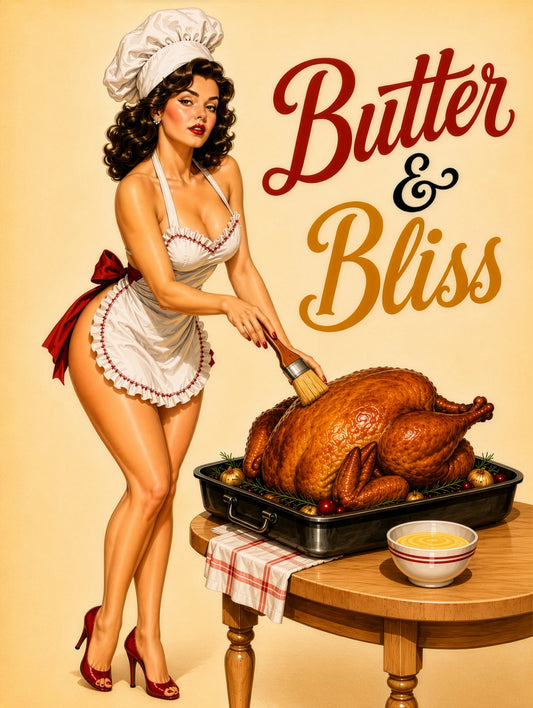
The specific visual language of 1950s pin up — the bold colors, the playful narratives, the characteristic silhouette of the fit-and-flare dress and the victory roll — is what most people visualize when they think of "pin up art." Our 1950s Pinup Girls collection celebrates this golden age in depth.
Bettie Page and the Underground Tradition 💋
While mainstream pin up art became more sanitized in the conservative 1950s, Bettie Page's work for photographers like Irving Klaw created a parallel tradition — bolder, more theatrical, and more directly connected to the subcultures that would eventually become rockabilly and punk culture. Our classic beauty pin up portrait draws on this legacy.
🌈 The Cultural Shifts (1960s–1980s)
The 1960s brought seismic cultural change. The feminist movement, the sexual revolution, and the emergence of new youth cultures transformed the context in which pin up art existed.
The classic pin up tradition went somewhat underground — associated with a nostalgia that some saw as retrograde and others saw as charming. Calendar art continued but the high-water mark of the form had passed.
Yet the tradition never died. Rockabilly culture kept pin up aesthetics alive through the 1970s and '80s. Vintage collectors treasured original Vargas and Elvgren works. And the seeds of the modern revival were being quietly planted.
🌟 The Neo-Vintage Revival (1990s–2000s)
The 1990s and 2000s brought a major cultural rehabilitation of vintage aesthetics — driven by rockabilly revival, the growth of tattoo culture, and a broader nostalgia for mid-century design and aesthetics.
Pin up art emerged from this revival with a new audience that understood it not as retrograde but as empowering — a tradition that celebrated feminine confidence and personality in a way that felt fresh and transgressive against the backdrop of 1990s pop culture.
New artists working in the pin up tradition began gaining recognition. The market for vintage pin up originals exploded. Bettie Page experienced a cultural renaissance that made her more famous than she'd ever been during her original career.
💻 The Digital Revolution and Custom Portrait Era (2010s–Today)
The digital revolution transformed pin up art in ways that the golden-age masters could not have imagined. For the first time, anyone could commission a custom, personalized pin up portrait — their own face and personality placed within the beloved tradition — at a price point accessible to ordinary art lovers.
This democratization of the pin up portrait is precisely what Pinup Art Studio was built for. We combine the traditions of the great masters — the warm color palette, the confident posing, the narrative richness of the mid-century form — with contemporary digital techniques that allow us to create stunning, personalized portraits for customers worldwide.
Our range covers the full spectrum of the tradition:
- Classic 1950s portraits in the Elvgren tradition
- Vargas-style portraits in the luminous airbrushed master tradition
- Hollywood glamour portraits drawing from the golden-age studio tradition
- Rockabilly portraits honoring the subculture tradition
- And dozens more, each connecting to a specific thread of the rich historical tapestry
❓ Frequently Asked Questions
Q: Is pin up art considered fine art or commercial art? This distinction has blurred significantly. Original works by Vargas and Elvgren sell at major auction houses for significant sums and are held in museum collections. The academic establishment is increasingly recognizing pin up art as a significant chapter in American illustration history.
Q: Who are the most collectible pin up artists? Alberto Vargas, Gil Elvgren, George Petty, and Rolf Armstrong are the most historically significant and collectible. Original works command prices ranging from thousands to hundreds of thousands of dollars.
Q: How does Pinup Art Studio connect to this historical tradition? Our artists are students of the tradition — familiar with its masters, techniques, and visual vocabulary. Every portrait we create at Pinup Art Studio is informed by this rich history. Browse our custom portrait options to see the tradition at work today.
Q: Where can I see authentic vintage pin up art? Museum collections (the Smithsonian has significant holdings), specialist auction houses, antique stores, and vintage poster dealers. For new work in the authentic tradition, Pinup Art Studio is your destination.
🚀 Become Part of the Story
The history of pin up art is not over. It continues in every portrait we create — in every person who sees themselves rendered in the confident, beautiful, gloriously alive visual language of this extraordinary tradition.
👉 Order your custom portrait at Pinup Art Studio today and add your own chapter to one of art history's great ongoing stories.
🎨 More than 130 years of beauty, confidence, and extraordinary art. Your portrait is the next page. 🌹
You might also like: